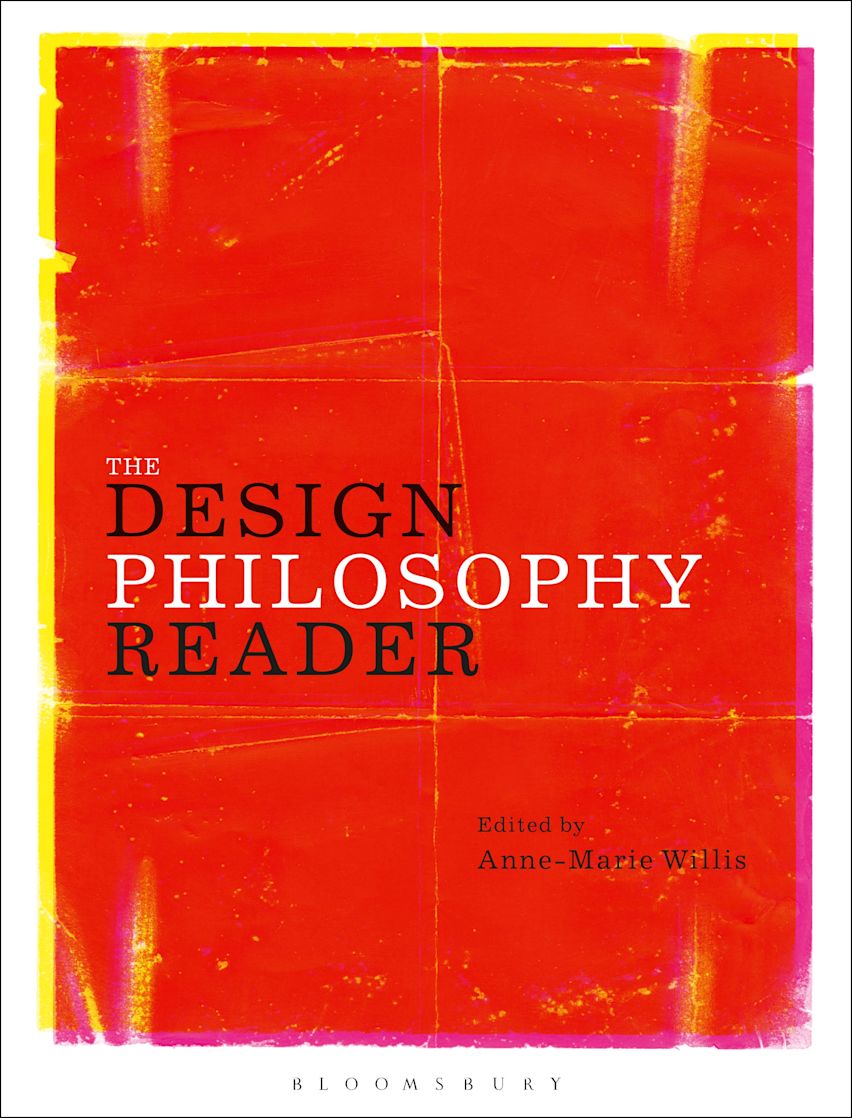
The Design Philosophy Reader
Edited by Anne-Marie Willis
The Design Philosophy Reader advances a clear and urgent argument. If philosophy is an enquiry into existence, and the conditions of existence are increasingly designed, then design cannot remain a marginal concern of philosophy. Nor can design afford to proceed without philosophical reflection. Design and philosophy are no longer separable domains. They meet at the level of how life is organised, sustained, constrained, and made possible.
The book frames design philosophy as a mode of inquiry into being with design as a worldly condition. It begins from the deliberately unsettling premise that everything is designed, and that the designed continues to design. What appears natural, inevitable, or merely technical is revealed as historically produced, materially embedded, and ethically charged. The book explores the nature of design, ethics, otherness, materiality, technology, visual culture and posthuman futures.
The collection rejects the idea of design as a neutral problem solving activity. Instead, design is presented as an ontological, ethical, political and cultural force that shapes what exists, how it exists and for whom. Philosophy, in turn, is repositioned as a practice that must attend to the designed background of everyday life, to what is most obvious and therefore least examined.
At the intersection of design and philosophy, non neutrality becomes unavoidable. Different modes of inquiry reveal different patterns of thought, different assumptions about the nature of things, and different accounts of what sustains or undermines life. Design philosophy makes visible the situated background of pre understandings that shape all action, including deliberation, designing, and making. It exposes what feels natural precisely because it has gone unquestioned.
For designers, philosophy is not offered as a source of more elaborate tools for thinking, but as a clearing. A space in which problematic practices can be confronted, disciplinary assumptions examined and organisational logics rendered visible. For philosophers, design becomes a site where abstract commitments are materially enacted, often without reflection or accountability.
The collection renders problematic the separation between subjects and objects, humans and things, designing and being, self and world. It broadens the field of action to include use, exchange, systems, environments, and time, allowing design to be understood as something that continues to change as it circulates and is taken up. Power, force, direction, and constraint are treated as constitutive of designed life.
At stake is moral accountability. Human existence is shown to depend on carefully designed life supports, envelopes, and infrastructures that are increasingly fragile and unevenly distributed. The challenge for design is therefore political. It lies in developing ways of representing and negotiating complex, contested realities rather than reducing them to neutral facts or technical problems.
The Design Philosophy Reader ultimately positions design as an agency and site of practical philosophy. Philosophy invites a lifelong commitment to reflection, critique, and creation. If design is to meet the conditions of the present, far more designers must accept this invitation, and far more philosophers must take design seriously as a force shaping contemporary existence.
“Designers need to engage philosophy not so much to gain more complicated "tools for thinking" but as a clearing.”

Steven Sullivan
Strategic Design Director